
Ask ten cannabis smokers to name a strain they’ve tried, and I’d bet at least seven of them say Blue Dream. It’s everywhere. It’s been everywhere for twenty years. And somewhere along the way, that ubiquity started working against it — people stopped thinking of it as a good strain and started thinking of it as just the default option. The thing you grab when you don’t know what else to get.
That’s underselling it. A lot.
Blue Dream is a sativa-dominant hybrid — 60% sativa, 40% indica — that came out of Santa Cruz, California in the early 2000s. It’s a cross of Blueberry and Haze, THC sits between 17% and 24% depending on the phenotype and grow, and it produces one of the more genuinely balanced highs in the cannabis world. Not the most potent. Not the most complex. But there’s a reason it’s still one of the top-selling strains in North America after two decades: it works, consistently, for a wide range of people and situations.
This review covers all of it — the genetics, the history, what the effects actually feel like, the flavor, and whether it’s worth buying in 2026 when the market is full of newer, flashier options. Short answer: yes. Here’s the longer one.
The genetics are straightforward: Blueberry (DJ Short’s indica) crossed with Haze (sativa). Some accounts point to Super Silver Haze specifically as the Haze parent — and if you’ve smoked a cut that had a slightly racy, energetic edge to it, that’s probably why. The Haze genetics vary across phenotypes, and that’s part of why Blue Dream weed isn’t always identical from one batch to the next. DJ Short’s own take on the lineage is a version called Azure Haze. Plenty of variations out there. The best ones all share the same core balance.
What the 60/40 sativa-indica hybrid split actually means in practice: you get the mental lift and social ease of the Haze side without the anxiety ceiling that pure sativas can hit, and you get the physical warmth of the Blueberry without the sedation that full indicas bring. It’s a middle road that happens to be exactly where a lot of people want to be.
| Type | Sativa-dominant hybrid (60% Sativa / 40% Indica) |
| Genetics | Blueberry × Haze (Super Silver Haze in some cuts) |
| Origin | Santa Cruz, California — early 2000s |
| THC Content | 17%–24% |
| CBD Content | Low (<1%) |
| Dominant Terpenes | Myrcene, Pinene, Caryophyllene, Limonene, Terpinolene |
| Flavors | Sweet blueberry, vanilla, earthy pine, subtle floral |
| Aromas | Fresh berries, light herbal sweetness, earthy undertone |
| Flowering Time | 9–10 weeks (indoor) |
| Yield (Indoor) | 400–500 g/m² |
| Yield (Outdoor) | Up to 600 g per plant |
The terpene profile is important to understand, as it will tell you a lot about the way this strain will feel. Myrcene leads — it’s earthy, calming, and helps keep the Haze from going too far thanks to its soft body ease. The balance is provided by pinene, which is known to stimulate thought and concentration and some research indicates that pinene may counteract some of the memory impairment effects of high doses of THC. So, that Myrcene-Pinene push and pull is mostly the entire reason why Blue Dream is called a “functional high. Caryophyllene is an anti-inflammatory herbaceous pepper. Limonene makes for a positive vibe. Terpinolene provides floral brightening in the appropriate phenotypes.
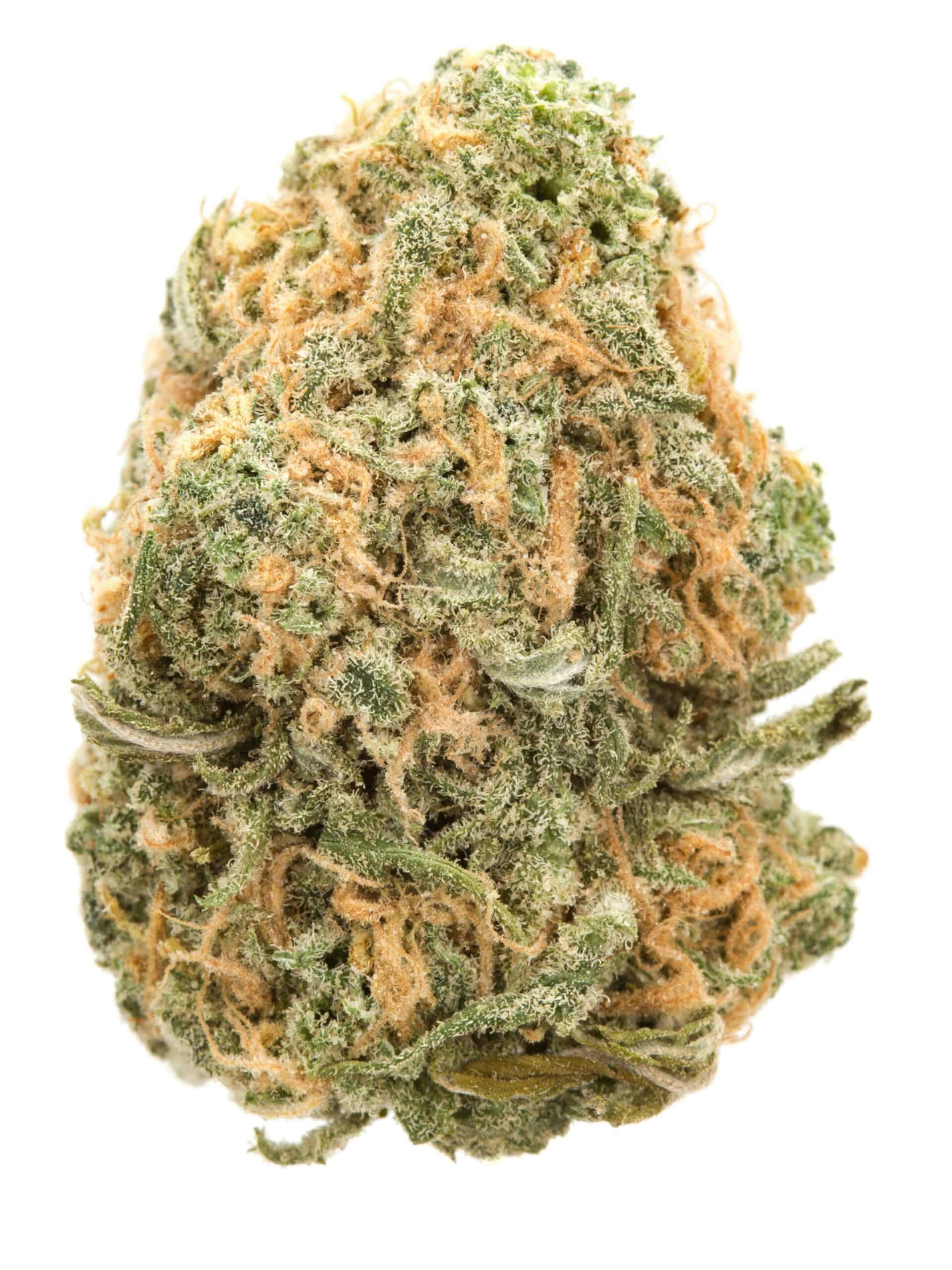
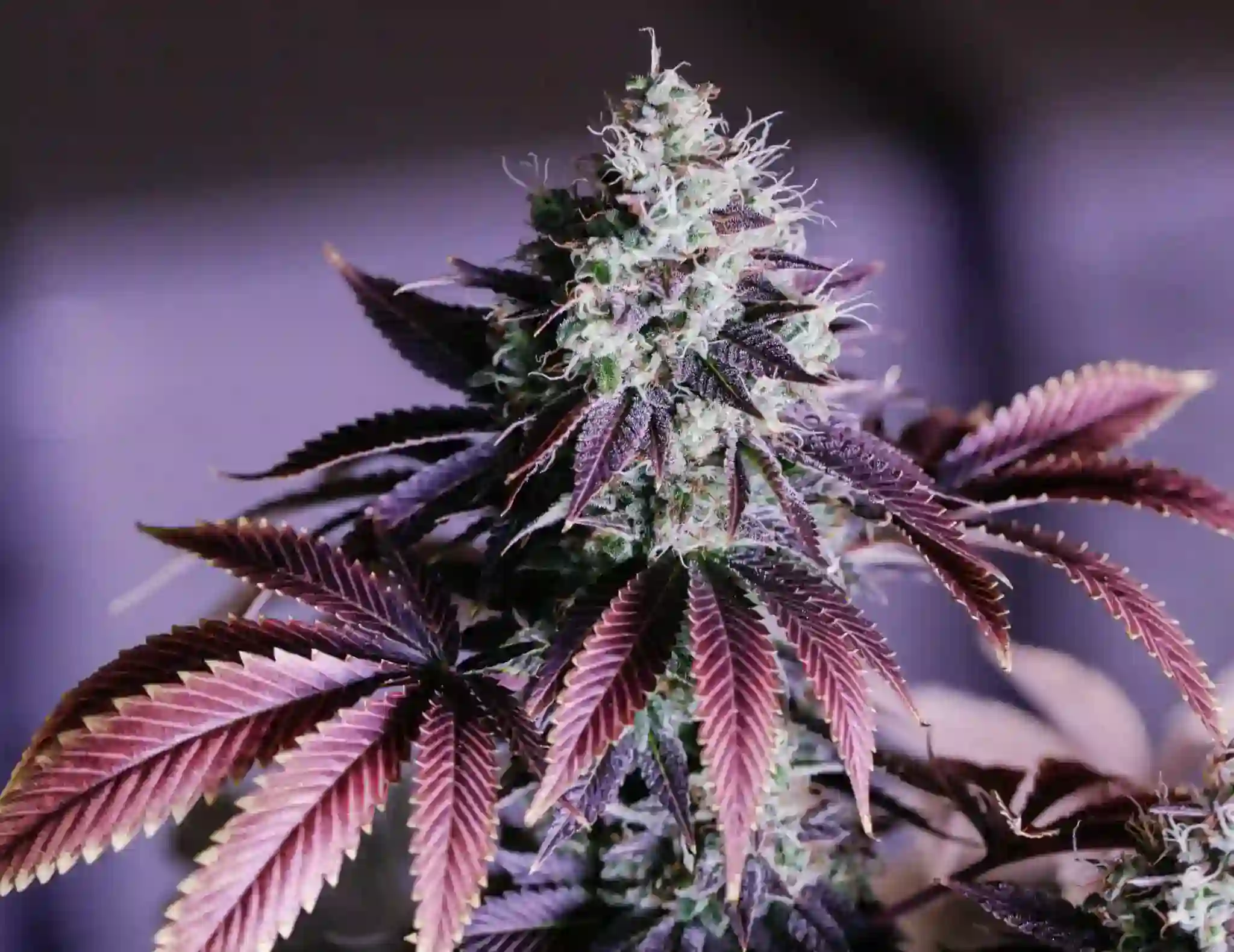
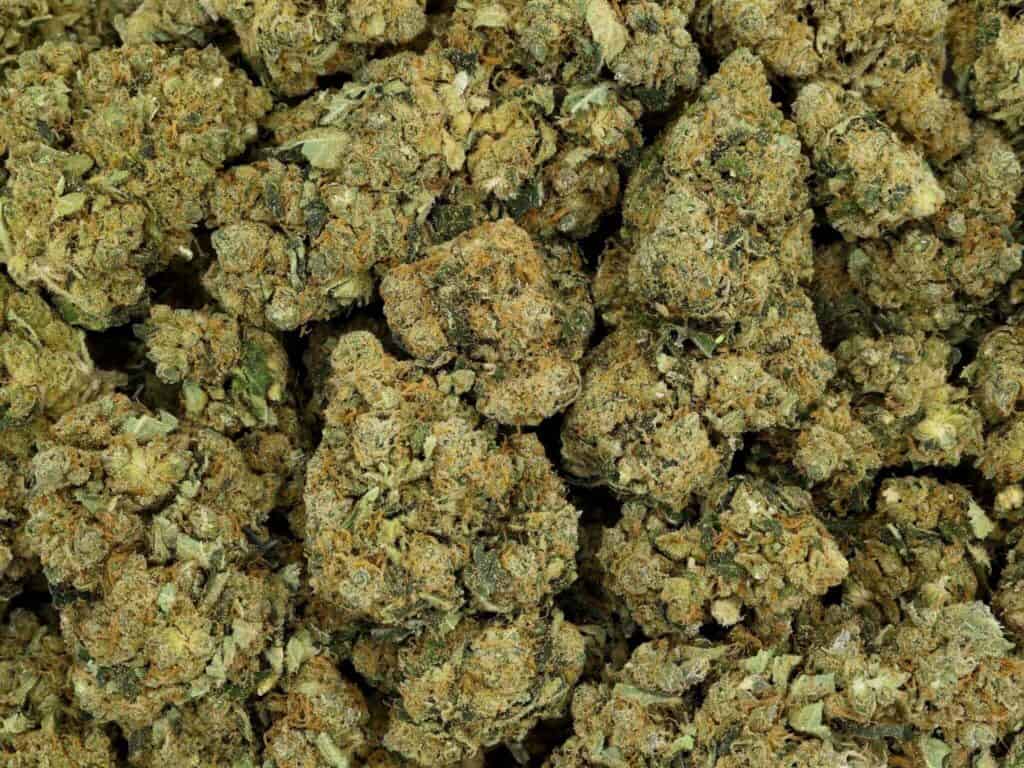
The buds are neon green, quite compact, but not quite rock hard, with amber hairs and a fine sand-like trichome covering. Remember to let it grow cooler while it is in flower and you will notice blue tints in the sugar leaves, the reason for the name. Not the most alluring look on the shelf, but a good quality one will have some bag appeal.
It is unknown to anyone who actually created Blue Dream. That is nothing extraordinary for old school cannabis from the early aughts, when there was no legal market, no documented breeding programs or any record keeping. The consensus is that it originated in Santa Cruz, California, and that it began to propagate as a “clonen-only” strain in the early California medical cannabis community. Only cuts are passed from grower to grower; no seeds. Partly this is why ‘Blue Dream’ is the name it has become today: The genetics have drifted over two decades, with different environments since cloning.
The popular parentage is a cross between DJ Short’s Blueberry and Haze. Over years of breeding and working with indica genetics back to the 1970s, DJ Short has created Blueberry, one of the most awarded cannabis strains of all time! The Haze cross balanced the resulting plant and gave rise to more sativa expression, more cerebral lift, longer flowering time, taller structure. The mix quickly became a hot combo.
By the mid-2010s, Blue Dream was a West Coast staple. It was always a popular strain in California, Oregon and Washington for cultivation and sales. It was first brought to light in music with hip-hop references, west coast rap — and in a way that very few strains ever do. Then, as if there were no other way, the counter-attack, ‘too common, too generic, not exciting enough for a market that was always in search of novelty’. It did not help that dispensaries were overrun with poor quality products that were being sold as Blue Dream.Nor did it help that the dispensaries were overrun with poor quality products sold under the Blue Dream name.
However, there was no change in the genes. Well, when well-grown by the people that know what they’re doing, it’s still a good ole’ blue dream. The reputation of the strain was hurt, but not the strain itself.
The thing I keep coming back to with Blue Dream is how un-dramatic it is. That’s a compliment. You smoke it, and things just… get better. Mood up. Shoulders looser. Whatever you were doing before becomes more interesting. There’s no moment of “oh no, this is too much” — the 17–24% THC range and the terpene balance keep it in a zone that’s potent enough to matter without pushing into the red.
Onset is a gentle mental brightening. A few minutes in, focus sharpens, mood lifts, conversations flow easier. The cerebral effects from the Haze genetics are real but not sharp — no racing thoughts, no edge. The Blueberry’s indica warmth runs quietly underneath, easing physical tension without pulling you toward sleep. That combination — alert mind, relaxed body — is exactly what makes Blue Dream weed such a reliable daytime strain. You can work on it. You can be social on it. You can do basically anything on it at a moderate dose.
Push the dose higher and it tilts. More sedation, occasionally some mild paranoia — particularly in users who are sensitive to THC or haven’t smoked in a while. But even then, Blue Dream is forgiving. The comedown is smooth. No hangover, no grogginess, no “what did I do” feeling the next morning.
Positive effects:
Possible side effects:
Blue Dream has one of the wider medical followings of any strain in regular circulation, and it comes down to one thing: it gives you relief without taking you offline. Myrcene and Caryophyllene handle the anti-inflammatory and pain side. Pinene keeps the head clear so you’re not trading pain for fog. The result is a strain that medical patients — including people dealing with chronic pain, chemotherapy side effects, and PTSD — can use during the day without sacrificing the ability to function.
This is not medical advice. Talk to a healthcare professional before using cannabis to manage any medical condition.
The aroma you get from Blue Dream is what you would expect; a blueberry cross. Slightly sweet and fresh with a herbal note. Not aggressive. You open up the jar and you’re greeted with berries that have a light earthy flavor, clean and pleasant, and not like some strains give you a skunking, before you are able to lift the lid off the jar. It’s a “noob” friendly nose, in the best way. Easy to get along with, without being dull.
It’s the same with the flavor. Exhale: fruity blueberry and a hint of vanilla. Exhale: earthy pine from the Pinene, with a faint herbal quality, clean finish. Some have a floral note and others a faint citrus from the Limonene. Nothing that would be harsh or have a medicinal-flavor. The smoke rests easily in the throat, which is one of the reasons why the Blue Dream weed is recommended to those that find other types of weed too harsh to use.
But it is important to note that Blue Dream may sound soft if you are a fan of strains rich in terpenes, which are the compounds responsible for the distinct aromas of a cannabis strain. Just be aware that if you enjoy strains that are loud and potent with cheese, diesel, or pure skunk, Blue Dream may not be your cup of tea. It is a matter of style and not quality. The flavour is well balanced and very nice. It’s not your intention to knock someone down. Well, same as the high one, actually. Lower temps extract more berry and flower. Joint or bowl allows you to inhale more of the earthy pine on the inhale. Either way it is clean burning.
I’ve smoked Blue Dream more times than I can actually count. Over the years, across different cities, different dispensaries, different growers. Some batches were forgettable — dry, faded, not much left in the terpenes. A few were genuinely excellent. The batch I’m reviewing here was the second kind.
Indoor grow, well-trimmed nugs, noticeably frostier than average for this strain. The jar smelled right — that clean sweet berry smell that tells you the terpenes are still intact. I rolled a joint, went outside, smoked about two-thirds of it.
Ten minutes later I was in a good mood for no particular reason. That’s the most honest way I can describe Blue Dream onset: it doesn’t feel like a drug hitting you, it feels like your baseline just quietly shifted upward. I was more interested in the things around me. Conversation felt easier. I had a creative idea I’d been stuck on for a few days and suddenly the solution seemed obvious — whether that was the Pinene, the mood lift, or just coincidence, I can’t say for certain, but it happens often enough with this strain that I’ve stopped calling it coincidence.
An hour in, the Blueberry genetics settled in — warmth across the back and shoulders, a comfortable physical ease. I wasn’t going anywhere fast, but I wasn’t stuck either. Just comfortable. The whole arc from first hit to coming down was about three hours, clean throughout. No anxiety, no dry spell of weird thoughts in the middle, no heavy-lidded crash at the end.
It’s not going to be anyone’s most memorable smoke. But it might be their most consistently enjoyable one. There’s something to that.
Blue Dream is one of those strains where sourcing matters more than usual. Because it’s so common, there’s a lot of mediocre product out there carrying the name — old flower, questionable genetics, batches that haven’t seen proper humidity control since harvest. The strain gets blamed for being underwhelming when really the batch was just bad.
At Highvendor, we carry Blue Dream from cultivators who actually grow it properly — indoor, controlled environment, harvested and cured to preserve the terpene profile that makes this strain worth buying. Every batch comes with a COA. Check the terpenes: Myrcene and Pinene should be leading the profile. If they’re not, the effects won’t be what you’re expecting.
Available in eighths, quarters, halves, and ounces. We rotate batches to keep the flower fresh. Store it in an airtight jar with a 58–62% humidity pack — Blue Dream’s berry terpenes are delicate and they’ll fade faster than you’d think if the humidity drops. Keep it right and it stays good for weeks.
If you want a reliable, functional strain that works for daytime use, social situations, creative work, or just unwinding without going fully offline — Blue Dream weed is still one of the best answers to that question after twenty years. Grab a batch at Highvendor and see what a proper grow actually does for this strain.

If you’ve ever fantasized about a cannabis strain that combines the delicious sweetness of fresh baked pastries with a solid […]
If you’ve smoked anything from the OG family before, Skywalker OG will feel familiar — and then it’ll knock you […]
⠀ General Assessment Here’s a guide to Thrasher Mushroom: its characteristics, effects, and my personal experience. I hope this will […]

By entering, you confirm that you are at least 21 years old.
By entering this site, you confirm that you are at least 21 years old, that cannabis is legal in your jurisdiction, and that you accept our Privacy Policy and Terms of Service.